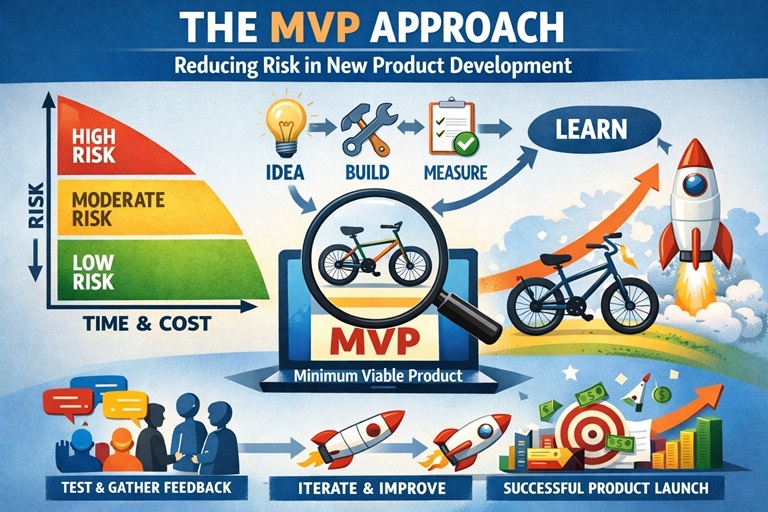
Understanding the MVP Approach
In today's fast-paced business environment, launching a new product can feel like a gamble. High risk and uncertainty are often the biggest challenges faced by business owners and decision-makers. The Minimum Viable Product (MVP) approach provides a strategic solution to these challenges, allowing you to test your ideas in the market with minimal investment. This article will explore the MVP approach, its significance in reducing risks in new product development, and showcase successful case studies that demonstrate its effectiveness.
What is a Minimum Viable Product?
An MVP is a simplified version of a product that includes only the essential features necessary to meet the needs of early adopters. By focusing on the core functionalities, businesses can launch their products faster and gather valuable feedback from users. This feedback is crucial for refining the product and ensuring that it meets market demands before investing significant resources in a full-scale launch.
Why is the MVP Strategy Crucial for Business Owners?
For business owners, the MVP strategy offers several compelling advantages:
- Reduced Risk: By testing a product with real users early in the development process, businesses can identify potential issues and make necessary adjustments, significantly lowering the risk of failure.
- Cost Efficiency: Developing a full-featured product requires substantial investment. An MVP allows businesses to minimize upfront costs while still entering the market.
- Faster Time to Market: With fewer features to develop, businesses can launch their MVPs quickly, gaining valuable insights and establishing a presence in the market sooner.
- Validated Learning: The MVP approach enables businesses to validate their ideas based on real user data, making informed decisions about future development.
Step-by-Step Breakdown of Successful MVP Case Studies
1. Dropbox: Simplifying File Storage
Dropbox is a prime example of how an MVP can lead to massive success. Before developing the full version of their file storage platform, the Dropbox team created a simple explainer video demonstrating the concept. This MVP helped them gauge interest and collect emails from potential users. The result? They received over 70,000 sign-ups before even launching the product. This validation allowed Dropbox to secure funding and develop a product that met user expectations.
2. Airbnb: A New Era of Hospitality
Airbnb started as a simple MVP that allowed the founders to rent out air mattresses in their apartment during a conference. They created a basic website to facilitate this idea. By testing their concept with real customers, they learned about user preferences, pricing, and what features were essential for success. This initial MVP laid the groundwork for Airbnb's future growth, which transformed the hospitality industry.
3. Zappos: Disrupting Retail
Zappos began as an MVP with a unique approach to online shoe retailing. The founder took photos of shoes from local stores, posted them online, and when an order was placed, he would buy the shoes from the store and ship them to the customer. This allowed Zappos to test the market demand for online shoe sales without holding inventory. The success of this MVP led to Zappos becoming a leading online retailer, eventually acquired by Amazon for $1.2 billion.
Implementing the MVP Approach in Your Business
To leverage the MVP approach effectively, consider the following steps:
1. Identify Core Features
Determine the essential functionalities that address your target audience's pain points. Prioritize features that provide immediate value.
2. Build a Prototype
Create a basic version of your product that includes only these core features. Focus on user experience to ensure it resonates with your audience.
3. Launch and Gather Feedback
Release your MVP to a select group of early adopters. Encourage feedback and be open to criticism, as this will help you refine the product.
4. Iterate and Improve
Use the feedback to make informed decisions about future enhancements. This iterative process helps you align the product more closely with market needs.
Conclusion: Making Informed Decisions for New Product Development
Embracing the MVP approach can significantly reduce the risks associated with new product development. By investing in a Minimum Viable Product, business owners can validate their ideas, make informed decisions, and optimize their investments. The case studies of Dropbox, Airbnb, and Zappos illustrate the transformative potential of this strategy. As you consider your next project, remember that starting small can lead to substantial growth and success.