PlanMyWedding - AI-Powered Wedding Management Web App
Client: Chelsea Evans
The Challenge
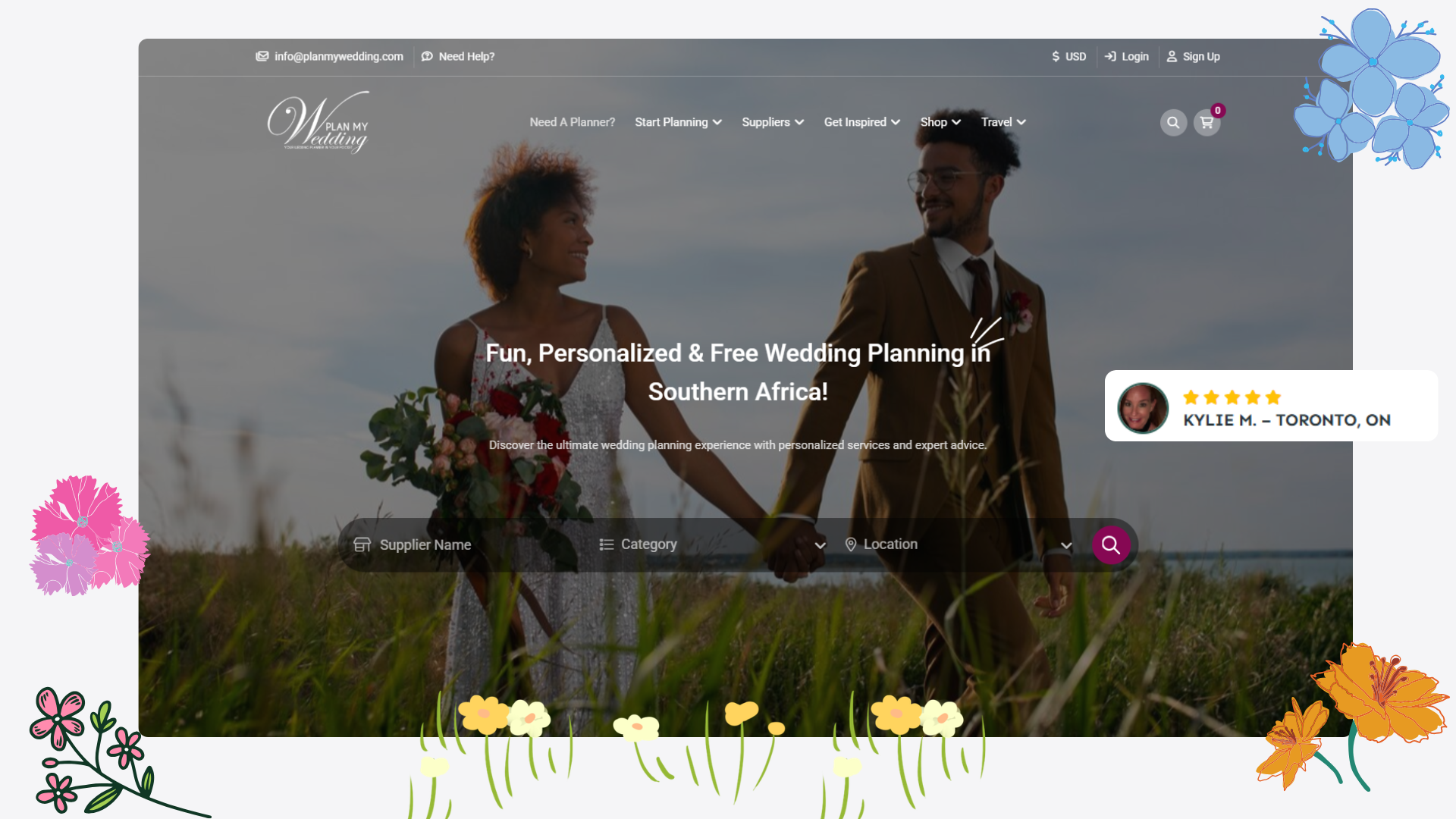
Plan My Wedding- a wedding planning and marketplace in one place: couples plan the wedding (lists, budget, guests, site, inspiration), discover and book suppliers and venues, shop hire/buy products, and coordinate guests (RSVP, addresses, invitations). Suppliers and venues can be discovered, receive enquiries, sell services/products, and get paid through the same ecosystem. Guests get simple links to confirm attendance or details without needing a full account. They tried earlier with wordpress multisite but the whole process was not attached with each other and mostly tracking of instruments were not easy to managed.
The Solution
Planning (couples) : Dashboard, profile and wedding details, checklist, budget and categories/expenses, guest list and groups, gallery, wishlists, gift registry view, paths into website and supplier tools.
Marketplace: Browse suppliers by category/location, venues and travel stays, products (buy/hire), cart and checkout with payments, order success/failure flows; gift purchases can tie to registry context.
Guest experience: Public flows to confirm RSVP, confirm address, and related tools surfaced from the main site (no heavy “app” requirement for guests).
Supplier / commercial: Bookings and orders, paid placements (e.g. banners/featured flows in the codebase), subscriptions/pricing patterns, messaging/request entry points, payouts reconciled with payment partners.
Content & growth: Inspiration/blog-style content, SEO-oriented pages, academy/tools pages, contact and lead capture, analytics-style tracking hooks for key actions.
Operations: Admin area for CMS-style pages, mail/gateway settings, and other configuration so the live site stays on-brand and connected to email and payments.
- Discover — Someone lands on the marketing side: home, inspiration, supplier/venue/product listings, calculators or tools. They filter, read, and shortlist (e.g. wishlist or contact/enquiry).
- Commit identity when needed — To plan deeply or check out, they sign up / log in. Session and account tie together planning data (guest list, budget, etc.) and commerce (cart, orders). Anonymous browsing can still use a cart where the product allows it; logging in connects that activity to the couple’s account.
- Plan in one workspace — The couple uses checklist, budget, guest list, gallery, and links out to website or supplier conversations as your deployment enables. The dashboard nudges completion of basics (e.g. wedding date/profile) so the experience stays coherent.
- Transact — They add services/products to cart, place an order, pay where required (with a clear path for free totals), then see confirmation; the system updates order state, inventory where applicable, emails, and registry-related markers when the journey is gift-driven.
- Coordinate people — From the guest list, the couple triggers RSVP / address / invitation style requests; guests use simple web flows to respond; the couple sees updated lists for seating, catering, and comms.
- Supplier side — Suppliers operate their slice: listings, orders/bookings, upgrades, payouts—so money and fulfilment align with what couples bought on the marketplace.
- Ongoing — Content, email, and payment configuration keep the site trustworthy and measurable for the business, while couples keep one hub until the wedding and handoff (thank-yous, final payments, etc. as you productize them).
What Was Achieved
For couples: Less fragmentation—planning, shopping, and guest logistics share one account and one narrative, so they spend less time juggling spreadsheets, DMs, and random checkout sites. For guests: Less friction—one link, clear actions, no forced app download for basic responses. For suppliers: Demand and fulfilment meet in one channel—visibility, enquiries, orders, and payment-related reconciliation are tied to the same platform instead of only offline invoices. For the business running Plan My Wedding: A repeatable funnel—content and SEO bring traffic, tools and registry deepen engagement, commerce and supplier products monetize the audience, and configuration + webhooks + mail keep operations reliable at scale.
Have a Similar Challenge?
Tell me about your project and I'll give you an honest scope and recommendation.